Google WeatherNext 3 AI Model Boosts Forecast Accuracy
Google has launched WeatherNext 3, an updated AI weather model that ingests satellite data to enable hourly forecasts and significantly boost local temperature prediction accuracy.
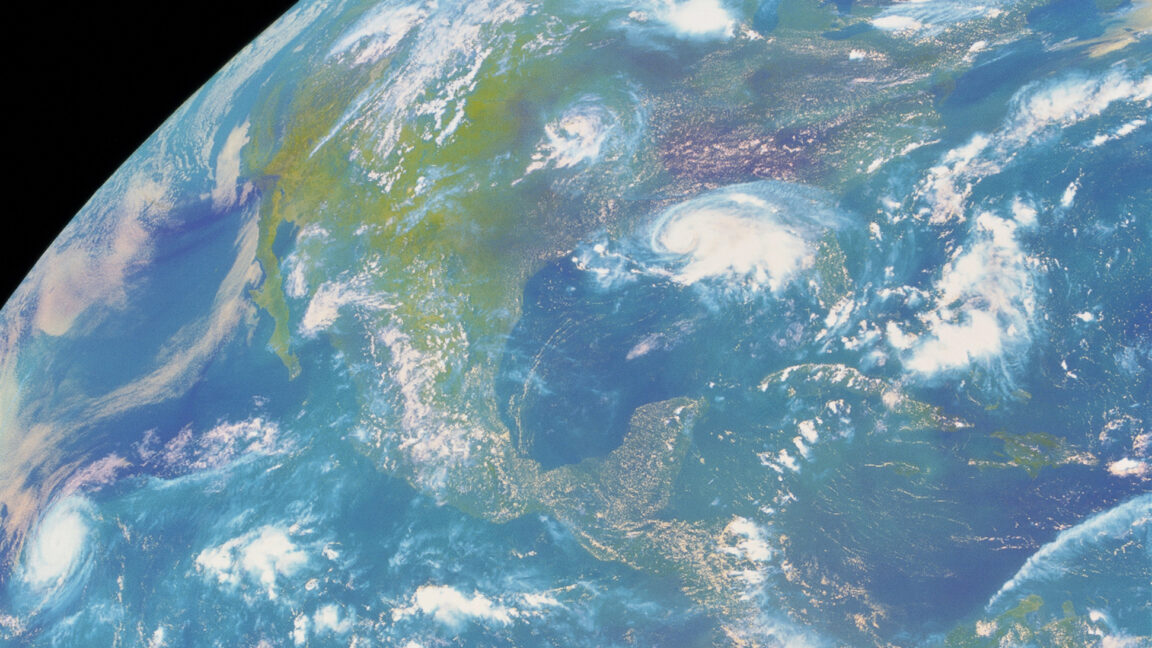
Google has rolled out WeatherNext 3, the latest version of its machine-learning weather forecasting model. The update represents a shift from relying solely on global reanalysis snapshots, which are typically generated every six hours. Instead, WeatherNext 3 directly ingests raw satellite weather data. This integration allows the system to shorten the lag time between current atmospheric conditions and new predictions, increasing its forecast frequency to an hourly rate.
To support these capabilities, Google increased the spatial resolution and expanded the size of the machine-learning model, implementing process tweaks to manage the higher computational demands. The update also introduces a separate machine-learning model trained on satellite-based precipitation estimates to provide multiple precipitation forecasts. Furthermore, WeatherNext 3 incorporates basic physical data, such as whether a coordinate is land or ocean and its surface elevation, to calculate localized surface temperatures and dew points.
According to Google's white paper, these changes yield substantial performance gains over WeatherNext 2 and the European Centre for Medium-Range Weather Forecasts (ECMWF) AI model. WeatherNext 3 achieved a roughly 5 percent improvement in upper atmosphere accuracy, translating to about six additional hours of accurate forecast lead time. Localized surface temperature accuracy improved by up to 30 percent. However, the model underperforms compared to rivals during the initial six-hours-ahead forecast before pulling ahead for the remainder of its 15-day outlook. It also occasionally displays grid-pattern artifacts, like hexagonal precipitation blobs, and inconsistent global average temperatures across its multiple forecast runs.
For meteorologists and industry practitioners, this release demonstrates that AI weather models can move beyond static historical reanalyses. Google's team notes that the model successfully utilizes "information-dense, low-latency observation data" directly. This reduces the heavy computational footprint of traditional physics-based simulations while maintaining competitive accuracy. The updated model is already live, powering weather information across Google Search, Maps, and Gemini.
This is our own summary of reporting by Ars Technica AI