McKinsey and AT&T Expose the Reality of AI ROI
As enterprises rush to adopt generative AI, new data from McKinsey and major tech firms reveals a stark gap between employee productivity and actual corporate return on investment.
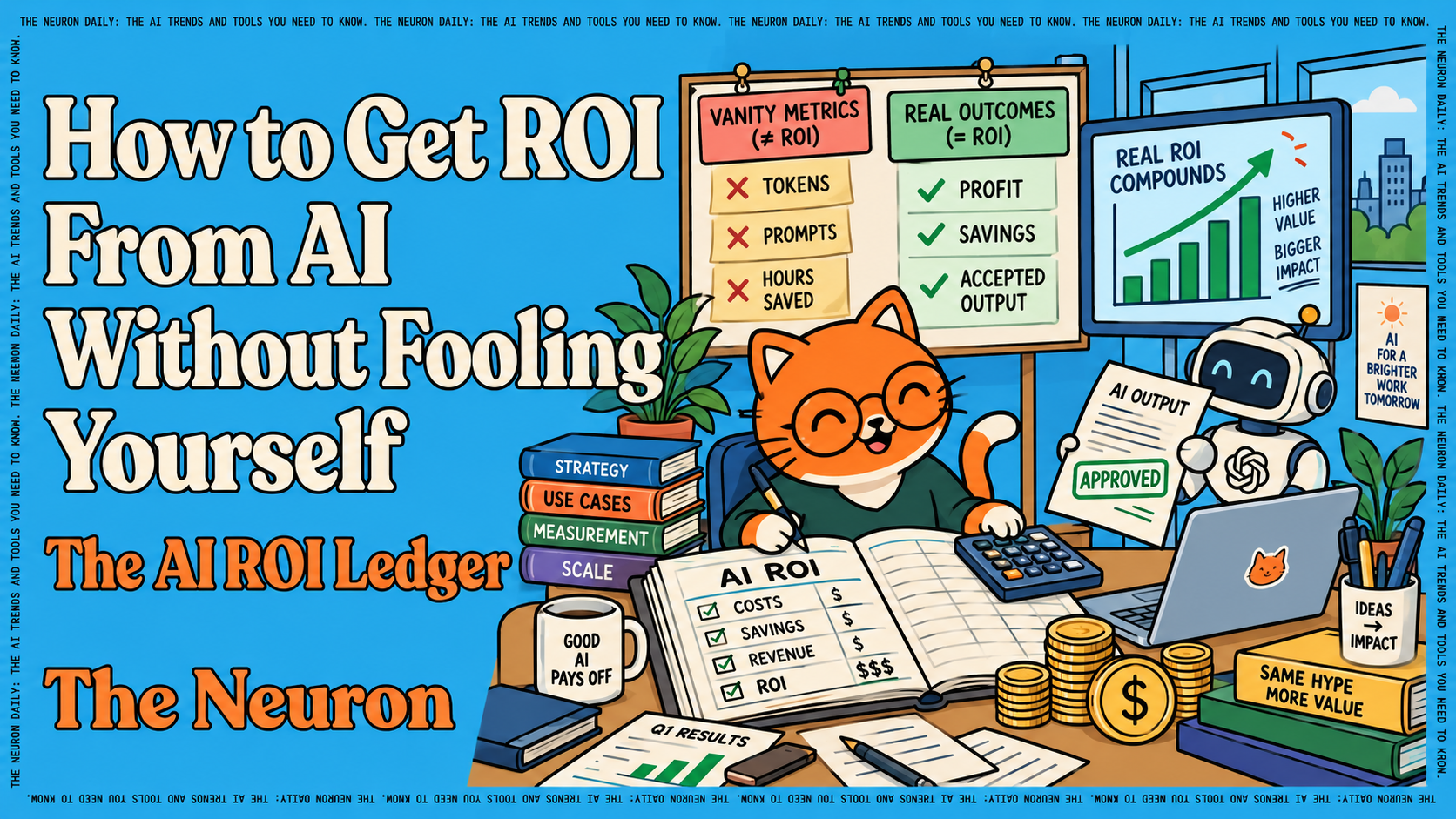
A McKinsey August 2026 survey highlights a disconnect: 80 percent of respondents saw productivity gains, but only 37 percent reported positive EBIT impact, and just 6 percent attributed over 5 percent of EBIT to AI. A 2025 QJE experiment with 5,172 customer agents showed a 15 percent resolution increase. A BCG study of 758 consultants using GPT-4 showed 25.1 percent faster work and 12.2 percent more tasks completed. A 2026 UK AISI study across four tasks showed 25 percent faster work, 19 percent higher quality, and 61 percent more quality-adjusted output. Conversely, METR found AI increased developer completion times by 19 percent, despite a 20 percent perceived speedup. Boston Children's Hospital saved 60,000 hours across 50 automations, valued at over $7 million. A 2025 Procter & Gamble study tracked 776 professionals.
API pricing as of September 9, 2026, varies widely. OpenAI's GPT-6 Astra costs $10 per million input tokens, $1 cached input, $12.50 cache writes, and $50 output, with prompts over 272K costing 2x on input/cache and 1.5x on output. GPT-5.6 Sol costs $4 input, $0.40 cached input, $5 cache writes, and $20 output, with a 2x input and 1.5x output surcharge over 272K through November 21, 2026. Anthropic's Claude Fable 5.1 is $10 input and $50 output, with cache reads at $0.25, 5-minute writes at $12.50, and 1-hour writes at $20. Claude Opus 5 is $5 input and $25 output, with cache reads at $0.50, 5-minute writes at $6.25, and 1-hour writes at $10, while fast mode doubles base rates to $10 and $50. Claude Sonnet 5 is $2 input and $10 output, with cache reads at $0.20, 5-minute writes at $2.50, and 1-hour writes at $4, featuring a tokenizer yielding 30 percent more tokens. Google's Gemini 3.8 Flash introductory rates through December 31, 2026, are $0.75 input and $3.75 output, with cached context at $0.075 and $0.50 hourly storage.
Yet McKinsey notes tokens represent only 20 to 25 percent of variable run costs for banking agents. Real-world success requires workflow integration. Circles achieved a 22 percent average revenue per user increase, a 9 percent churn reduction, and a 65 percent autonomous resolution rate. AT&T processes 40 billion tokens daily across 150 solutions, achieving 20 percent more automated resolutions, $150 million in annual savings, and an ROI increase from 2x to 5x. AWS built Field Advisor with Bedrock AgentCore and Claude, managing over 20 agents, handling 120,000 prompts, saving salespeople two hours weekly, reducing latency by 41 percent, and consolidating seven accounts into one.
This is our own summary of reporting by The Neuron