Zepto Cuts Support Costs 65% Using Databricks AI
Indian quick-commerce startup Zepto has scaled its customer support to over 100,000 daily tickets using an evaluation-first AI agent architecture built on Databricks and MLflow.
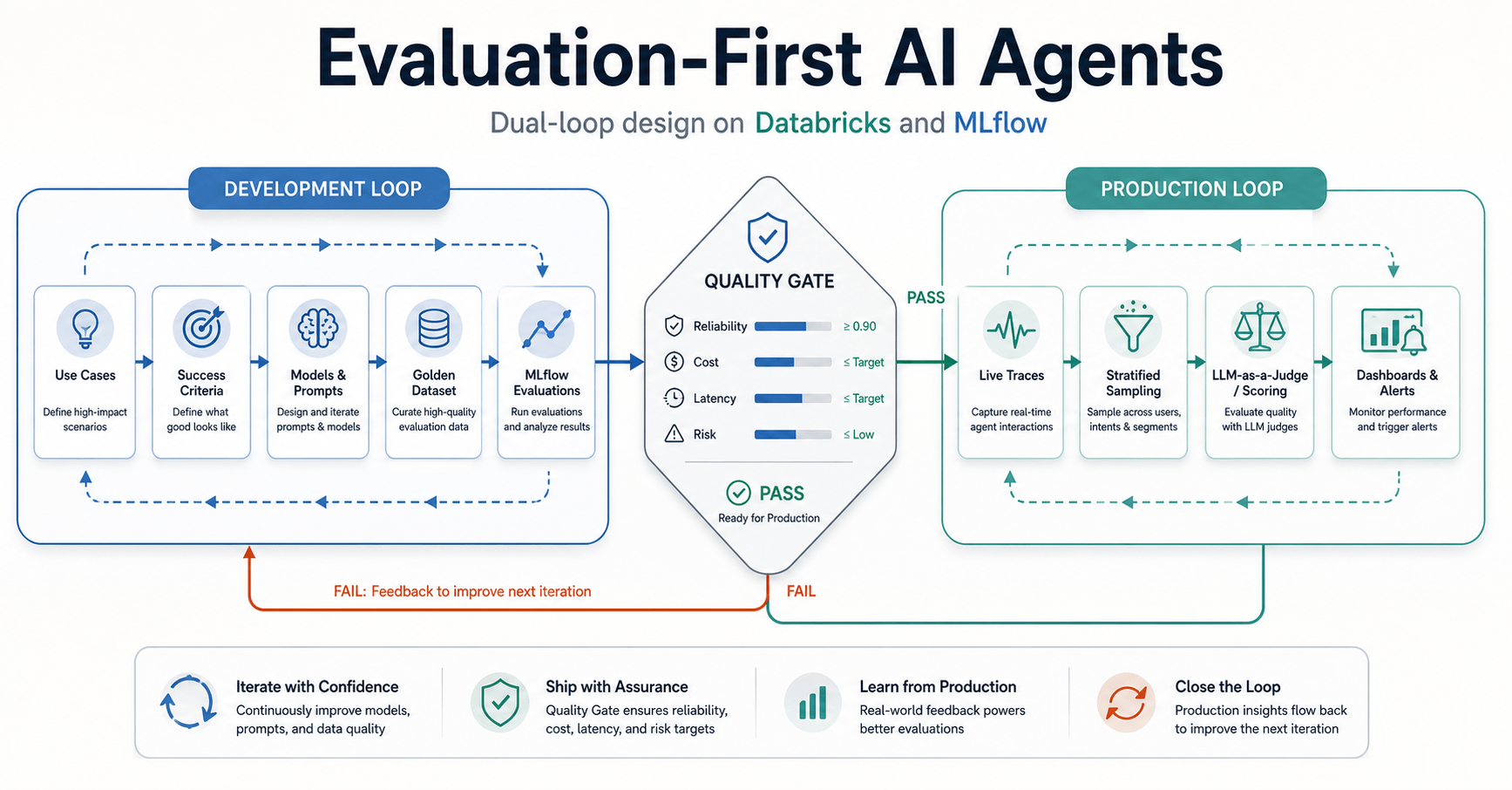
Zepto, a quick-commerce platform operating in over 60 cities with thousands of products, has deployed a multi-agent AI system on Databricks and MLflow to process more than 100,000 customer support tickets daily. By shifting to an "evaluation-first" architecture, the company successfully automated over 80 percent of its support tickets under human oversight. This implementation resulted in a 65 percent reduction in support costs, a 20 percent boost in customer satisfaction, and a payback period of less than one month.
To maintain reliability, Zepto built a dual-loop framework that links development and production through a strict quality gate. A cornerstone of this system is its "golden dataset," which grew over six months from 500 examples with an eight-point development-to-production accuracy gap, to 2,000 examples with a two-point gap, and finally to 5,247 examples with a mere 0.4-point gap. The system utilizes specialized vertical agents like WIMO, Missing, Returns, and Unable to Pay, alongside horizontal oversight agents for tasks like image deduplication and manipulation detection, which uses a jury of three vision models.
The platform leverages stratified sampling to evaluate 18 to 20 percent of its live traffic, translating to roughly 14,400 traces per day. This targeted approach yielded an 86 percent reduction in review costs per identified issue and a ninefold improvement in edge-case detection, with critical alerts flagging issues within four to six minutes. Furthermore, automating the feedback loop saved approximately 155 hours per month, freeing up the equivalent of two full-time engineers.
For AI practitioners, Zepto's deployment highlights the danger of optimizing single metrics in isolation. When the team focused solely on intent accuracy, they gained five points but suffered a 133 percent latency spike and a 0.4-point drop in customer satisfaction. Switching to a composite, multi-objective score achieved a three-point intent gain with only a 17 percent latency increase and a 0.2-point customer satisfaction improvement. The system also caught a major regression during development, where intent accuracy fell from 92.1 percent to 87.4 percent, allowing engineers to restore it to 94.2 percent before deployment.
This is our own summary of reporting by Databricks AI